The World’s First Megawatt Car
Whether for a car, truck or even an SUV, the automotive world has always been powered by a lust to get faster — faster than last year and faster than the competition. There have always been competition among manufacturers to produce faster and more powerful vehicles, even where the limits of what a road-legal car can do are pushed. Few brands have always stayed outside the boundaries of what a car company should be/act/is, and among them Koenigsegg stands alone;The Swedish manufacturer received international acclaim for developing some of the fastest hypercars to ever be constructed, but one particular accomplishment outshines a growing number.
Agera Platform Evolution
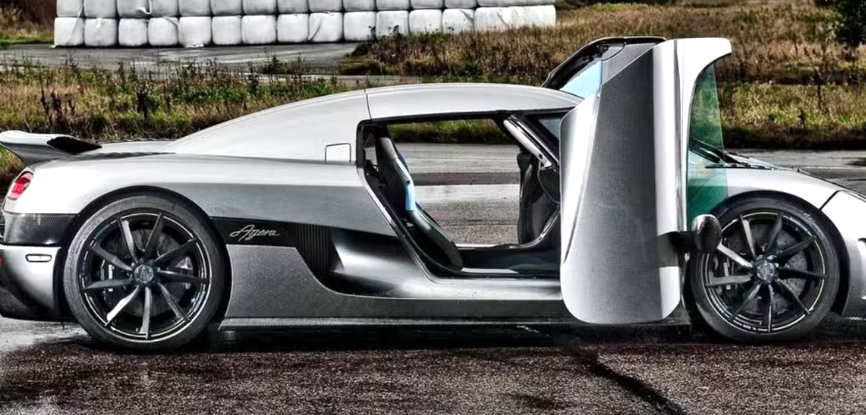
Koenigsegg One:1 History The story of the One:1 traces its roots back to the development of Koenigsegg’s Agera. The Agera debuted as a descendant of the firm’s previous CC-based cars and was a major advancement in terms of technology and engineering. Sitting on a new platform and utilizing Koenigsegg’s sophisticated twin-turbocharged V8 engine, the Agera brought the mammoth manufacturer’s confidence in developing new tricks instead of leaning on traditionally accepted automotive practices.The Agera boasted a multitude of cutting-edge technologies which contributed to its differentiation from rival makes. This included systems intended to eliminate turbo lag, a custom seven-speed transmission, and the famous Ghost Light system which lit up vital elements of the vehicle. Such innovations, together with high performance, established the Agera as one of the most respected hypercars of its generation.Koenigsegg continued to enhance the Agera platform, launching even further capable models such as the Agera R and Agera S, each of which represented some kind of evolutionary betterment from its predecessor in terms of performance, aerodynamics, or sheer capability. Flex-fuel technology was it part also in the Agera S, so that sales could be conducted in some markets where the fuel requirements for the Agera R created challenges.
CONCEPT: The Birth of the One:1
Come the mid-twenty-tens and Koenigsegg was ready to chase an ambitious trait many believed a street-legal production car could never possess. The goal of the company was to create a car with an unparalleled one-to-one power-to-weight ratio. Ultimately, this goal would inform the name and character of One:1.
It sounded simple in theory, but it was an extraordinary difficulty in practice. You would get one HP per kilogram of car weight. To strike such a balance took concurrent improvements in engine performance, weight reduction and aerodynamic efficiency. Rather than simply cranking up the boost pressure to make a higher number for marketing purposes, Koenigsegg designed the One:1 in such a way that each new horsepower developed was accounted for with equally significant matching reductions and efficiencies throughout the vehicle’s structure and dynamics.It resulted in a hypercar the likes of which had never been seen before. The One:1 was more than another high-performance variant; it became a showcase of engineering potential when every aspect of the car’s development was guided by a single focus.
Achieving the One Megawatt Milestone
The One:1 is really something because of its engine. Powers from a five-liter twin-turbocharged V8 as used in even faster Koenigseggs, such as the Agera R.
And they gave a lot of specifics on the upgrades to Koenigseggs five-liter twin-turbocharged V8, including certain tweaks that will make the turbos work harder and an E85-fuel system that helps powertrain run better The One:1 is darn lucky right now for a possible five-liter twin-turbocharged V8.
All these revisions allowed the One:1 to make big power.Over 1340 horsepower. That is a lot of power more than one megawatt. Because of this the One:1 was the production car to officially make more, than one megawatt of power. The One:1 and its engine are really something. The One:1 has a powerful engine that makes it stand out from other cars.
For Koenigsegg, this wasn’t just a simple horsepower milestone.It confirmed years of engineering development and created an entirely new type of performance car, one often referred to as a “megacar.” Although Koenigsegg uses it loosely to describe the entire lineup, at the same time output-like metrics showed that the One:1 truly was set apart from all others.
Lightweight Construction and Aerodynamic Excellence
Making crazy power was only one part of the equation. For a one-to-one power-to-weight ratio, Koenigsegg also had to significantly cut weight.The extensive use of carbon fiber over the chassis and body helped engineers shave serious weight off the Agera R’s curb weight.
Weight saving had to be carefully measured against the needs for structural integrity and safety. All components were analysed to optimise efficacy without risking performance or longevity. The result was a lightweight but astonishingly strong vehicle.Aerodynamics contributed just as much to the One:1’s success. The car also had an enhanced aerodynamic package, with extra winglets, lengthened venturi tunnels, modified air intakes and an adjustable rear wing. All of these features collaborated to bolster downforce and ensure stability at high speeds.
Add in more optimized suspension setup and lighter carbon fiber wheels, the go-faster bits turned the One:1 into a car that was equally at home on public roads as it would be on race tracks.The handling of the vehicle was on par with its tremendous power, which is a characteristic found in few hypercars.
Performance That Redefined Expectations
One:1 performance was everything its engineering achievements promised and then some. And from rest to sixty-two miles an hour in two and a half seconds or so, one of the quickest-accelerating production cars available at that point.With ideal conditions, the quarter-mile was equally impressive in under ten seconds. It also proved to have epic high-speed potential, as it is reported to be capable of nearly two hundred seventy-three mph. It was not just the raw speed either that made figures particularly remarkable, but how quickly they were achieved. Thanks to this balance of power, weight and aerodynamic trickery, it allowed the One:1 to outpace many rivals relying simply on the bump in horsepower.
A Rare and Influential Hypercar
Koenigsegg cars have always been special, and the One:1 was no different than that; it was exclusivity. It is perhaps the rarest and most desirable model in the history of Tuckers because only seven examples were ever built.
The One:1 was a big deal in the hypercar space, despite only ever having seen production of seven examples.It showed that great performance could be had through clever rather than brute force engineering. The car challenged the competitors and whetted enthusiasts’ appetites because it demonstrated a production car could effectively match legendary horsepower with an never before seen power-to-weight ratio.
Later Koenigsegg models, like the Agera RS and Agera Final Edition also used some of the One:1s performance ideas. The Agera RS and Agera Final Edition copied its power. None got its exact size and shape just right.
The One:1 was special because of how it was built.
Many cars have a lot of power, like the One:1.
The One:1s size and shape made it really unique.
The Legacy of the One:1
The concept has helped to shape some of the most important hypercars ever built, including Koenigsegg’s One:1. While it made history as the first production road car to produce one megawatt of power, its importance goes far beyond that one specification.
The side effect of cutting-edge engineering, ultra-light weight (due to the extensive use of carbon fiber), and aerodynamics working in perfect harmony toward one end.It was a revelation in hypercar and performance benchmarks that still shape how automakers develop cars today.
Today, the One:1 is one of the fastest machines ever made and also a reminder that Koenigsegg has never stopped pushing the limits. The One:1 justified its place as one of the most legendary, groundbreaking vehicles ever made by having a one-to-one power-to-weight ratio to be first production car over the megawatt barrier.