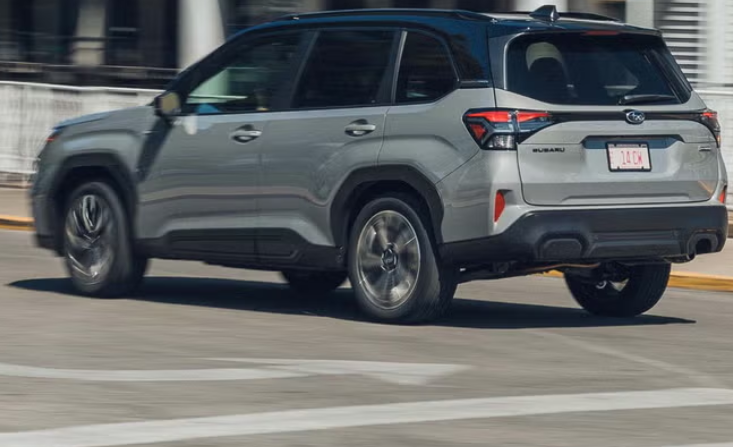
Subaru recalls Forester SUVs for risk of sunroof glass detaching
Toyota-affiliated Subaru on Tuesday announced a major safety recall for thousands of its newest Forester SUVs after finding a manufacturing defect that could cause the sunroof glass to become detached while in motion. A look at defective auto parts— this recall involves certain Forester and Forester Hybrid models, it highlights the need for sound quality control during vehicle production as modern SUVs are slowly moving towards ever larger panoramic and power-operated glass roof systems.
The problem revolves around the bonding of the sunroof glass to the sliding frame assembly. The glass panel may not be adhered strong enough to the supporting structure in some vehicles, according to documents filed with federal safety regulators. In due course, this could lead to that glass breaking free from the car and posing a very real hazard for those within and other roadway users. Subaru is unaware of anyone being hurt or crashing because of the flaw, but said it’s moving quickly to examine cars needing repairs and put in new parts where required. This recall is an example of how minor manufacturing faults can be severe if the issue isn’t caught.
What Prompted the Recall?
Subaru recalled the Forester after problems were detected with the attachment of the sunroof glass in some recently-built models. Don’t miss: The automaker found during internal investigations and technical reviews that some sunroof assemblies weren’t sufficiently bonded in manufacturing, federal investigators have since learned.
Be warned: This isn’t due to defective parts or cheap, adhesive rubbish. Instead, it seems more like a functional problem with the application itself. And if not applied correctly the connection of a glass panel over which slides a frame cannot have enough rigidity or life to be useful. The roof is reliant on wind pressure, temperature changes and the vibrations and movements of the car. In the most severe failure cases, the glass panel might even become completely disconnected from the car while driving.
As you can imagine that would turn into a significant safety risk—especially on the freeway, if bits of your car broke off, then most likely crashed in people or other cars killing them.
Which Subaru Models Are Affected?
Webmaster The Subaru recall covers a small number of new 2023 model-year examples of the Subaru Forester and Forester Hybrid sport utility vehicles.
The vehicles also comprise some of the company’s deepest product lines, tackling a segment that can only be described as the most competitive in the business: compact SUVs. With practicality, safety aids, relatively low pricing with all-wheel-drive and a reputation for reliability, the Forester has long been among the best-selling models from Subaru.
The new hybrid variant just brings another dimension to the model, giving buyers better gas mileage while still delivering the utility and versatility expected from a Forester.
Because the problem is tied to a manufacturing process rather than an actual design defect, only certain quantities of vehicles produced in specific production periods will be included in the recall campaign.
Scope of the Recall
The recall encompasses almost seventy thousand vehicles, according to filings related to safety.That seems like a big number, but Subaru believes only a fraction of that figure hold the defect. However, in the case of an entire production run being blamed for a defect, automakers usually recall all vehicles produced during that time-frame to ensure no potentially dangerous vehicles are still on the road.
The move allows consumers protections and also is a rule compliance step by the U.S. federal vehicle safety rules.Roof components are often the subject of recalls, since those parts are more directly exposed to airflow, weather and structural stresses. In cases where the consequences include a potential separation of the component during operation, even a low defect rate can trigger a large-scale recall.
Understanding the Sunroof Bonding Issue
Sunroof systems in modern world are rightly designed and require superior manufacturing methods to lend long term safety service.Weak points might develop if bonding is not done accurately or ineffectively. More importantly, after continuously driving on the same roads, between 20 times and for more than a month – if tested again following this period – the connection can weaken with overuse.
Subaru suspects that a number of sunroof assemblies in these cars may not have received the bond line quality required during production. So weaker the bond, higher is a risk that glass will separate.
Even though the chances of full decoupling remain relatively low, such a scenario is realistic enough to take immediate corrective action.Potential Safety Risks
A detached sunroof panel can pose multiple risks.
The most natural worry is that the glass itself leaves your automobile while it is moving along. A loose plate might hit cars, bikers, cyclists or pedestrians nearby.
The panel could even fail without making direct contact with another road user, creating an instantaneous blockage prompting drivers to take evasive action. These conditions can lead to increased risk of vehicle crashes and road-side incidents.Separation of the glass panel from the vehicle could leave occupants in the cabin vulnerable to debris, environmental elements and sudden air movement. Now if a component of the roof suddenly exits the car this can cause just enough distraction to a driver at an important moment.
Because vehicle safety standards favor the complete elimination of any chance a component will fall off, manufacturers take these matters seriously.Subaru’s Response
To avoid problems, Subaru has launched an extensive recall plan to detect and fix faulty vehicles.
Those that own the recalled Foresters will be contacted and asked to bring them into an authorized Subaru dealership, where experienced technicians will check the roof opening trim line assembly. The purpose is to inspect whether the glass panel has been properly glued on or bonded with frame.
Should techs find poor adhesion, the sunroof glass unit will be replaced with an appropriately-built one.Importantly, the work will be undertaken free of charge to owners. This is standard procedure for safety-related recalls and makes certain that consumers may remedy the issue at no cost.
The automaker has already alerted dealerships about the recall campaign to prepare service departments for incoming inspections and repairs.
No Reported Injuries or Crashes
Fortunately, no injuries or accidents have been reported in connection with the defect thus far, which is one aspect of the recall that is comforting.Subaru told it was aware of a handful of technical reports regarding the issue, but none had led to crashes, property damage or injuries.
This means that the ever internally got wind of the issue fairly early on and took corrective actions before anything became reportable.
Development of tools for the early detection is one of most critical part of modern automotive safety programs. That said, manufacturers are keeping a close eye on warranty claims, dealer reports, customer complaints and internal quality-control data to catch issues before they become full-blown bushfires. Forester recall is a good example of how these monitoring systems are so effective that manufacturers have enough data to take proactive measures from just a small handful of cases.
What Owners Should Do
Although that date may sound like an immediate issue, owners of affected models should stay tuned for any recalls from Subaru.
The best thing you should do is schedule an inspection appointment with your local dealership once they are notified. Although the sunroof looks like it works well, that bonding issue may not be apparent during day-to-day use. During its investigation, NHTSA did find that many vehicles affected may not show any external indications of abnormal performance but nevertheless will include unusual noises, vibrations, wind sounds or movement around the sunroof area.
Having the inspection done ensures peace of mind and shows if part replacements are necessary.
In any safety recall, early participation minimizes the potential risk associated with the condition and allows a vehicle owner to once again enjoy their vehicle in accordance with its full safety and reliability capabilities.
Why Recalls Matter
Vehicle recalls may sometimes make for sensational headlines, but in many cases are an important part of the commitment to safety by automakers.
Automobiles today are made up of the thousands of components that come from tangled international supply chains. Sometimes, problems with manufacturing may arise post-production even if extensive testing and quality control procedures were followed.
Because recalls enable manufacturers to efficiently address those issues. Instead of sweeping safety issues under the rug, automakers collaborate with regulators to find the vehicles in question and get them properly repaired.While recalls can be seen as a bad thing, they reflect that a company cares about safety and protecting its customers.
Subaru, who also voluntarily decided to call back the affected Forester models, were quick to decide on this manufacturer caused issue too; better be prepared than face another “Diesel-gate” moment.
Final Thoughts
A large number of Subaru Forester and Forester Hybrid SUVs are covered by its most recent recall which was announced over concerns that sunroof glass improperly bonded can fly off the vehicle while in motion.
While only a small percentage of vehicles are believed to have the defect, the possible safety implications spurred both Subaru and federal regulators into action.
The plan the company has established is specific to inspections and parts replacement of the sunroof assemblies when necessary. The recall seems to be a proactive move to uphold safety standards and preserve customer confidence, as there have been no injuries or crashes tied to the problem.For owners, the best answer is also straightforward: pay heed to recall notices and schedule an inspection if your vehicle is affected; in any case, be sure to take advantage of the free repair program. For Subaru, the fix will help keep the Forester doing what it has historically done best: providing class-topping safety, reliability and peace of mind for owners.