An Important Step Towards More Easing Electric Car Charging
General Motors partners with EVgo and introduces Energy Pass, an EV charging solution to streamline ownership As electric vehicles grow in prominence, the most significant issue associated is managing numerous charging accounts, payment methods and mobile apps across different charging networks. Energy Pass believes it has the answer, consolidating multiple major charging providers through a unified application.The new system provides drivers access to a large portion of the national DC fast-charging network with a single account. General Motors is finding a way to simplify the charging experience by eliminating the requirement for separate memberships and payment arrangements, making electric long-distance travel easier for its customers.
A Unified Charging Experience
Energy Pass is a payment and access platform built directly into General Motors’ existing mobile apps.Chevrolet, GMC and Cadillac owners can sign up through their brand-specific apps to gain access to charging networks without having multiple accounts.
Among the most convenient properties of the system is drivers with EVs from multiple General Motors brands can have one charging account.Once on-boarded through a single Energy Pass account, charging access can also be shared across multiple vehicles to enable a more seamless experience for households with multiple GM electric vehicles.
The move is indication that industry is increasingly looking to take the friction out of the way for consumers, meaning we want electric vehicles ownership to be as straight forward and simple as possible.
Access to Major Charging Networks
One of Energy Pass’s most important advantages is its extensive coverage network. With a single account, drivers have access to the charging stations from many familiar faces in fast-charging.The networks participating consist of IONNA, Electrify America, Tesla Superchargers, EVgo and ChargePoint. These providers collectively account for more than seventy percent of the nation’s DC fast-charging capacity. Such a large countrywide coverage means that drivers have access to thousands of charging locations without needing to juggle multiple accounts.
GM has also suggested other charging providers are still in talks with.Energy Pass could potentially become an even more powerful solution if more networks opt into the program, widening Charging network availability without customers needing to change anything about their current account.
Connecting different charging ecosystems from a single platform is a big step toward convenience and could alleviate buyers’ fears about range anxiety when it comes to electric car uptake.
Emergence of Plug and Charge Technology
A further major feature related to Energy Pass is Plug and Charge capability. This enables charging to be less burdensome by allowing dialogue between a vehicle and order station.
Drivers simply plug in the charging cable and get charged without opening an application, scanning a code or authorizing payment. The automobile is identified by the system and payment is handled through this Energy Pass account.At present, the functionality for Plug and Charge is available at the IONNA network and can be used with Tesla Superchargers (with some caveats). Tesla compatibility extends to General Motors vehicles using the North American Charging Standard connection, which GM is expected to make standard across its electric vehicle fleet by just about the end of 20 twenty-seven.Plug and Charge is the future of public charging, according to General Motors. Expansion plans for the capability across other charging partners are in the works to ensure a unified driver experience no matter which network they choose.
On top of convenience, some charging providers could also provide further value to the enrolled customers by offering exclusive discounts, promotions or other benefits through Energy Pass.
Expanding Functionality at Home with Your Electric Vehicle
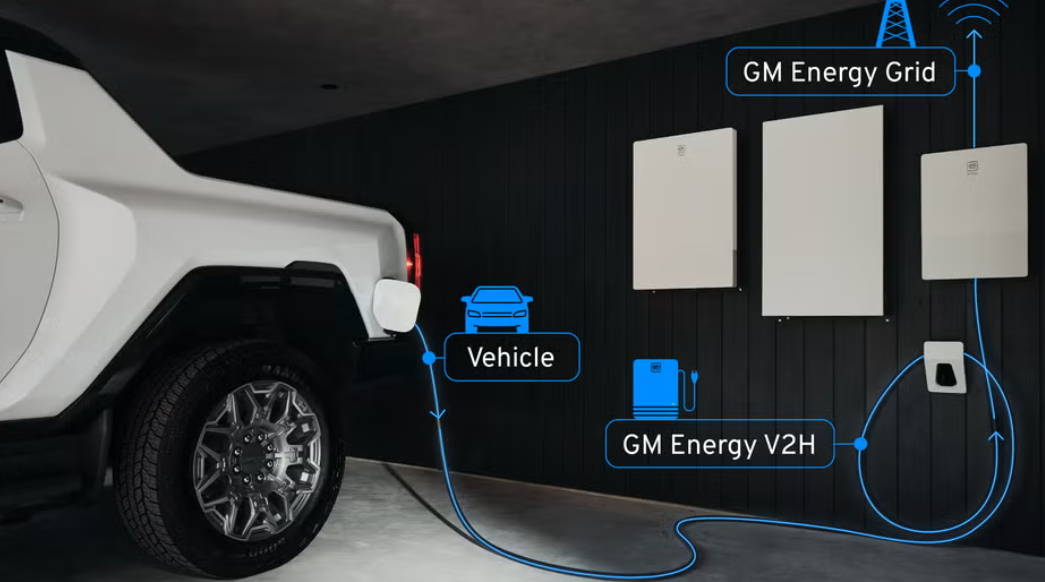
Also included in the announcements made by General Motors, were updates on its more than just the Energy Pass. The Car Empowering Community presented the innovation surrounding Vehicle-to-Home technology (collectively referred to as V2H), which is already enabled in many of Nissan’s electric vehicles.
Currently, there are over 250,000 GM electric vehicles on the road that support. When fitted with supporting hardware, the cars can also supply backup power to residences in an outage.Vehicle-to-Home require more than just a basic home charger. A separate inverter, energy management hub and battery integration hardware are needed to enable electricity stored in the car’s battery pack to back feed the home.
Afterward being built, the set up allows residents to benefit from lower far-off peak electricity fees during off-peak hours whilst also offering emergency backup strength in widespread outages. This turns an electric car from just a means of transport to a highly sought after source of energy for the American home.
Moving Toward Vehicle-to-Grid Integration
While Vehicle-to-Home technology will benefit homeowners, the next part of the energy puzzle—the Vehicle-to-Grid programs—isn’t so much about homes for General Motors.
Through vehicle to grid Vehicle to Grid (V2G) technology that enables EVs to put power back into the grid when necessary. By doing so, electric vehicles can go from being passive consumers of energy to active players in managing electricity demand.This capability could help utility companies hold up the grid balance during peak usage periods. All those vehicles, connected to one another could be seen as a swarm to deliver power in decentralized fashion at peak demand relieve the strain on transmission infrastructure and enhance overall grid reliability.
GM has been doing pilot programs with various utility companies and is now testing these capabilities. Pacific Gas and Electric already is testing efforts to incorporate electric vehicles into grid-balancing functions, with similar work underway in Detroit through DTE Energy.These programs assess the full potential of electric vehicle batteries to serve both local energy systems and continue supporting mobility needs for the vehicle owners.
Long Term Energy Networks Plan
The implications of Vehicle-to-Grid technology go far beyond the current pilot programs. Electric vehicles are viewed by utility providers as a pebble in the pond of which distributed energy storage will be fed directly into the large area grid and operated on a grand scale.Pacific Gas and Electric is aiming for over fifty-two thousand GM households signed up to grid-support projects by decade’s end. This could result in millions of connected energy assets that are able to respond flexibly to shifting electricity demand.
PRNewswire — Ceres Media has reported that global EV adoption is accelerating. Energy experts predict that hundreds of millions electric vehicles are likely to be running on roads around the world by end of decade. Across all these vehicles it collectively comprises a huge store of energy.Conventional vehicle batteries lie idle for much of the day while parked. For this intrinsic storage potential, Vehicle-to-Grid systems try to release this dormant capacity for the benefit of more comprehensive energy management processes.
The electric vehicles as a large-scale infrastructure that can potentially balance renewable energy generation, increase resiliency of the grid and decrease reliance upon traditional power supplies when demand is high.
A New Chapter for E-Mobility
Energy Pass is not just another charging service. This showcases GM’s overarching goal of a cohesive ecosystem that supports the integration of transportation, energy management and digital connectivity.
Their approach is to make EV ownership easier and more exciting by giving access to a broad charging network from one account, simplifying payments, expanding Plug and Charge capabilities as well as enabling advanced energy applications including Vehicle-to-Home and Vehicle-to-Grid technologies.As charging networks develop and energy technologies progress, solutions such as Energy Pass could be critical in overcoming adoption barriers. This outcome means a simplified charging experience for consumers. This is a new opportunity for managing electricity demand, and for utilities. More broadly for the electric vehicle industry, it is one further move into a future that looks more connected and more efficient.