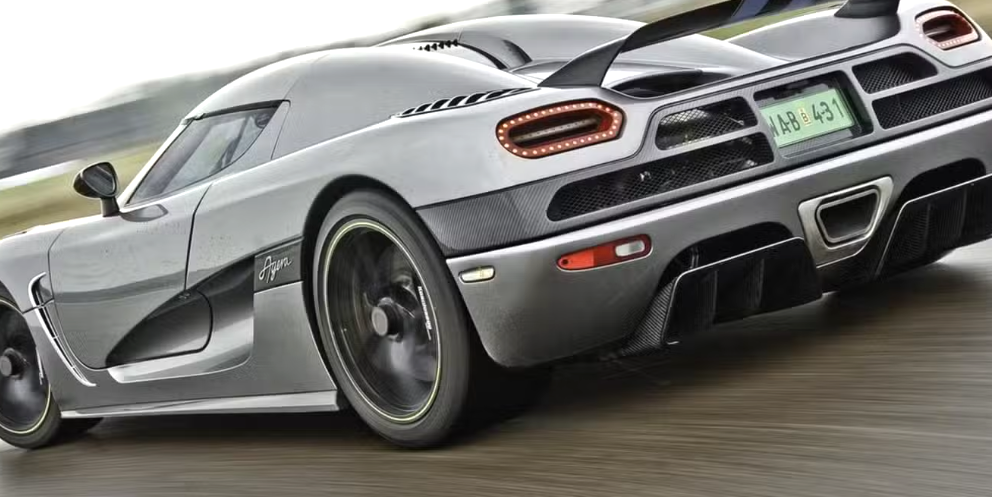
First Car In The World To Make One Megawatt Of Power
A thirst for higher levels of automotive performance has historically struggled with grand expectations. Over the years, manufacturers have competed to create faster, lighter and more powerful machines; the technology is always two steps ahead of engineering. Koenigsegg is one of the companies that redefined what hypercars were capable, and their creations are different from all others. Royal Enduro is known for building some of the fastest and most high-tech cars ever.The defining moment was borne from a model that many thought couldn’t be done in a road-going production car: one megawatt of power with one to one power-to-weight ratio. We had it was the legendary Koenigsegg One:1.
The Base Established by the Agera
However, things really progressed for Koenigsegg when the Agera came along—the model that preceded the One:1 version.The Agera, which eventually replaced the previous-generation of CC -based vehicles, itself included a new platform and suite of technologies designed to maximize performance and drivability.
The Agera quickly became one of the definitive hypercars from that era. It had clever engineering solutions to reduce turbo lag, more responsiveness and exciting driver engagement. A custom seven-speed made sure the car was effective in putting down power, while details like the brand’s signature ghost lights gave it a bit of flair and helped separate it visually from its competitors.Koenigsegg eventually offered a more focused version of the platform, the Agera R and Agera S offerings, with each succeeding iteration emphasizing performance and aerodynamics even further than before. The Agera R made headlines for its extreme power, and the Agera S increased availability thanks to flex-fuel technology that allowed it to run in markets with little E85 fuel.
Those models paved the way for one of automotive history’s most important accomplishments.
The Dream of a Perfect Ratio
The idea behind the One:1 was astonishingly simple and immensely difficult to realize. In the quest to bring a production vehicle down to an one-to-one power-weight ratio, Koenigsegg. Essentially, this meant having one horsepower for every kilogram of car weight.
A street-legal car had never come close to achieving a goal like that at the time. It was accomplished by working the narrow line between two key factors that usually work against one another.More power equals heavier components, while less weight and performance typically come at the expense of structural strength.
Instead of making horsepower the ultimate goal, Koenigsegg looked at the problem as a whole engineering challenge. The vehicle was refined down to every detail; power, weight and aerodynamics all working in concert.That spawned a hypercar unlike anything seen before or since.
Engineering a True Megacar
All of this was powered by a modular iteration of Koenigsegg’s five-liter twin-turbocharged V8 engine, massively developed up for space-age delivery at the One:1. Although it shared the basic architecture of the powerplant showing up in the Agera R, revisions increased overall output considerably when running on E85.
There were also an increase in boost pressure, a new set of internal specifications and the availability of a flex-fuel system.It was, therefore, the first production car to ever break through that significant barrier.
But why, you might ask, would reaching one megawatt matter beyond a clever headline figure? It was a symbolic stepping-stone that raised the One:1 to its own class. Koenigsegg even started calling its cars “megacars,” although the One:1 was the first model to truly earn that title according to the generally accepted power standard.
Weight Reduction and Aerodynamic Excellence
But producing massive amounts of power was only a part of the puzzle. It meant losing considerable mass from the vehicle to achieve the required power-to-weight ratio.
Koenigsegg then went on a massive diet, stripping away excess weight through judicious applications of carbon-fiber components and lightweight engineering, ultimately bringing the curb weight down to around 1,360 kilograms. This cut back the One:1’s already incredible power-to-mass, however.Aerodynamics also received extensive attention. Its sophisticated package was optimised to improve stability and down force at extreme speeds. You learned how various aerodynamic additions helped air management and track performance, including added winglets, larger venturi tunnels, redesigned side air intakes and an active rear wing.
Guide for the basic structure of these aerodynamic advancements an improved suspension framework, and light power carbon-fiber wheels propelled handling traits. The upgrades vastly improved the One:1, giving it a car that was just as able at hauling tail down the strip as driving around a circuit.Performance That Redefined Expectations
Pairing massive power, a lower weight, and superior aerodynamics gave some stunning performance numbers.The One:1 can reach sixty-two miles per hour from rest in around two and a half seconds. The car ran quarters in under ten seconds, making it one of the fastest production cars ever made.
With a claimed top speed of nearly two hundred seventy-three miles an hour, it proved that its engineering package was sound.But rather than raw numbers, the One:1 offered a driving experience that embodied the advantages of a carefully balanced design philosophy.The car is one of the rarest and most exclusive models in Koenigsegg history, with only seven examples leaving the factory. Benchmark That Remains Unmatched
Yet, that right there is arguably the defining achievement of One:1 and even its true accomplishments stay pretty much unparalleled. Today, there are hypercars with higher horsepower numbers, but few achieve the same one-to-one relationship as Concours-worthy weight-loss paired with for all-out power.Many impressive competitors have emerged, but none has duplicated the specific approach that took the One:1 to such great heights. It remains an engineering icon and is one of the benchmarks against which power-to-weight efficiency is measured.
It made its mark far beyond even Koenigsegg’s own production run, informing the shapes of future models from the automaker and inspiring engineers all over.
The Agera Family Looks In Two Directions
The Agera platform was launched with the mega hypercar One:1, and has been evolving from there. The Agera RS was the end product from that concept, representing a culmination of experience and years of development.
Several of those upgrade packs will allow the more potent Agera RS variants to develop One:1 levels of power. The power-to-weight ratio was out of reach as the model got something heavier.Similarly, the Agera Final Edition was powered by a similar engine layout and signaled the end of the line for Koenigsegg’s Agera family. But even with its remarkable abilities, neither model was as well-balanced as the One:1 offered.
Consequently, the One:1 continues to be the high mark for performance in the Agera family.
Koenigsegg’s Surprising Small-Engine Innovation
Koenigsegg may be known for its massive power figures, but it has also shown a real talent with smaller engines.One of the more interesting examples that we got was called the Tiny Friendly Giant, or TFG for short. This was a blind-powered two-liter turbocharged three-cylinder engine incorporating Koenigsegg’s Freevalve camless technology.
In what was a small displacement, the engine still produced six hundred horsepower and four hundred forty-three pound-feet of torque. This figure put it among the most power-dense automotive engines ever created.
The TFG was supposed to go into the Gemera, but demand from customers pushed for the V8-powered version.Consequently, the three-cylinder powerplant never reached production but is nevertheless an impressive showcase for Koenigsegg’s engineering prowess.
Sadair’s Spear in the Modern Era
Fast forward to present day, where Koenigsegg is still breaking performance barriers. Among its most recent projects is Sadair’s Spear, an ultra-low-production hypercar inspired by a storied racehorse.
The vehicle, powered by a twin-turbocharged V8 developed by Koenigsegg, makes over 1,600 horsepower on E85.Weight reduction was also a big focus for engineers, and the final production version is even lighter than the Jesko to achieve an even higher power-to-weight ratio than history’s One:1.
Production will be limited to just 10 examples, placing the Sadair’s Spear amongst the most exclusive creations by the company.
A Lasting Automotive Milestone
The Koenigsegg One:1 is one of the most important hypercars ever made. The result was a meticulously crafted accomplishment that bundled power, weight and aerodynamic efficiency in a single package.With the One:1, you not only received one megawatt of power (the equivalent of 1,341 horsepower), but also a one-to-one power-to-weight ratio — finally what was widely regarded as an operational standard (…more than a decade later) to which others would rise. It showed that innovation is not just about adding more horsepower, but aiming for the perfect harmony between every facet of its design.
However current-generation Koenigseggs keep pushing the envelope, but One:1 is still the car that changed megacar from aspirational goal into actual production.