Best Hybrid — Toyota Prius vs Toyota Corolla?
Over the years, Toyota has made itself a best example as a builder of reliable hybrid cars with decently efficient gas mileage. Some of the best-selling Toyota hybrids today include the Prius and Toyota Corolla Hybrid. While both cars use Toyota’s advanced hybrid technology, the buyers they’re aimed at are a bit different.Prius is purpose-built as efiicient hybrid with unique appearance, where as Corolla Hybrid successfully marries hybrid power to the familiarity or a more traditional compact sedan.The choice gets even more interesting as buyers move near the top of the Corolla Hybrid lineup, where a loaded lightly optoned model can be so close in price to a base Prius it’s hardly worth mentioning. For a difference of under two hundred dollars, they’re also frequently comparing two vehicles which, while the same brand name, have distinctly different strengths.
A breakdown of the current iterations they are on
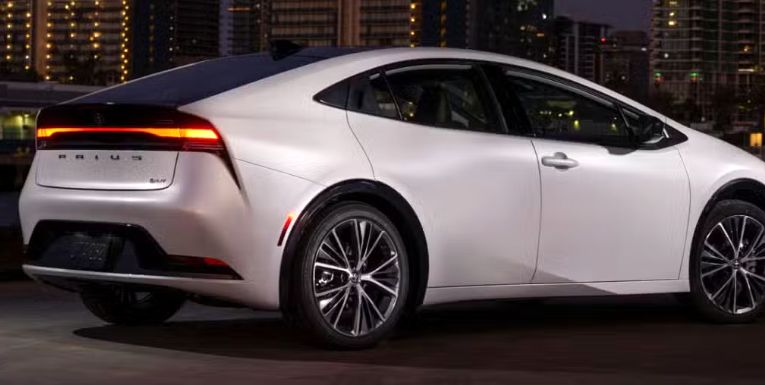
The newly broken covers for the 2023 Toyota Prius is a full redesign that sees the hybrid symbol getting ready to enter its fifth era with an essentially new appearance and driving character. Disguised as a sporty, high-tech alternative to the plug-in hybrid Camry that Toyota claims is all-new, the next specialized version will sport improved aerodynamics and updated styling. Volta also gets a host of updated safety features and connectivity functions that are already standard across much of Toyota’s lineup.Features Toyota’s th{0.5in} 12th Generation Corolla platform in a hybrid form Introduced in on the 2023 Toyota lineup, it maintains its four-door shape while receiving a refreshed exterior style, updated safety systems and even the addition of all-wheel drive availability. it still is a borderline frontrunner in the highly competitive compact sedan segment, but this current generation has been on sale longer than even the Prius and we’re probably well into its life cycle.
In addition, both vehicles are products of Toyota’s well-earned reputation for reliability, making either long-term investment an attractive proposition with low operating costs.
Sales Performance Reflects Wide Appeal of Corolla
The Corolla Hybrid continues to lure many more buyers, in spite of all the buzz surrounding the latest Prius. The Corolla nameplate is among Toyota’s best-selling offerings, with a large chunk of those sales coming in the form of hybrid models.
One reason so many are buying the Corolla Hybrid is that it isn’t all that new, at least not in a way that breaks new pricing ground.It drives and behaves exactly like a traditional sedan, which is something that many shoppers appreciate while getting high gas mileage. Finally, Prius on the other hand, and known as sci-fi car gives maximum hybrid drivnig experience.
Though it boasts more modern technology and better performance, sales numbers show consumers prioritize practicality, comfort, and affordability of Corolla Hybrid vs. Prius.
Size, Dimensions, Road Presence
Although the GT and Golf GTI compete in the same compact segment they are different in size. Its pretty Prius features a longer wheelbase that should improve ride comfort-and highway stability. Side profile that follows the familiar wider track with a slightly longer overall-looking in case of wideness as well as roof height Corolla Hybrid : Just.This upscale styling imparts a more conventional sedan look to the outside while allowing for a larger sense of room inside. With ground clearance similar between the two, neither model has any real advantage traversing rutted roads or steep driveways. For the most part, parking and manoeuvrability will feel almost identical for owners, as their exterior dimensions are very closely matched. Because Prius is physically larger, it also carries more weight than Corolla Hybrid. But it does make a difference to driving feel, and the character overall.
Passenger Comfort and Interior Space
InsidecabinBoth vehicles offer spacious, everyday driving comfort. Nonetheless, space distribution varies with the seating position.
Provided partly by the dimensions, Prius actually has a little extra space for front passengers in terms of leg and shoulder room. This stretch-out space will likely be cherished by drivers and front passengers alike on long drives.On the other hand, rear seat passengers may find a more cordial experience in the Corolla Hybrid. Fortunately, for rear-seat passengers it’s considerably more spacious, an important distinction for long-legged people. There is also more rear seat room too, thanks to a fractionally higher rear ceiling in the Corolla Hybrid.
The Prius scores a narrow victory for total passenger space, but the Corolla Hybrid’s nasa-worthy rear-seat amenities definitely make it an attractive family or commuter option as long as you aren’t too frequently shlep-ing adults.
The Ultimate Question Is Cargo Capacity
Where Prius clearly differentiates itself is cargo space. The hatchback design grants Prius a significantly greater amount of storage space over the conventional trunk offered in Corolla Hybrid.The increased cargo space opens up more options for carrying luggage, groceries, sporting goods and bigger objects from around the house. Folding the rear seats, though, opens up a greater amount of usable space and one that makes the Prius far more practical for active lifestyles.
Still, the Corolla Hybrid’s trunk space will be adequate for toting groceries and running everyday errands or commuting duties, but it won’t swallow a big load like a Prius. Best Hatch – Hatchback (most useful) Buyers will no doubt make better use of additional cargo space offered in an SUV.
Fuel Efficiency, and the Performance
Both models use the same tried-and-true Toyota hybrid hardware but Prius commands a clear advantage when it comes to performance overall. This means much quicker acceleration and driving, as a bigger hybrid powertrain supplies even more horsepower.
While the Prius provides more power, it is also still the more fuel-economical choice. Its more sophisticated hybrid system enables it to achieve outlandishly high fuel economy ratings—higher than Corolla Hybrid’s. The Prius’ combination of better performance and lower fuel consumption is one of its most convincing selling points.But the Corolla Hybrid is also highly efficient, delivering very good fuel savings over conventional gasoline-powered cars. On the other hand, the Prius shows that buyers need not have to trade performance for great efficiency.
Both vehicles are pretty forgiving, at this rate, especially its among stop-and-go traffic thatthann when commuters tend to spend a good bit of time in. These hybrid systems are designed to harness energy loss from braking back into the power system using regenerative braking technologies; thus, hybrids operate best in an urban environment with frequent braking.
Ownership Considerations of Long-Term
While the cost savings on fuel are part of the ownership equation. Resale value is more significant to the total cost of ownership equation.
Being one of, if not the most recognisable hybrid vehicle on the planet, the Prius has historically retained good residual values. Used buyers on the whole often look for the Prius because of its efficiency and green credentials.Thanks to the Corolla nameplate’s history as one of the most reliable family cars, the Corolla Hybrid also holds value well. The Prius, though, might have a narrow advantage when it comes time for the owner to sell or trade the vehicle.
The Prius itself also picked up a strong resale value that can offset some of the car’s original cost for owners who buy and keep a new vehicle every few years.
Finally:
So therefore, it all comes down to the personal preference between the Toyota Prius and the Toyota Corolla Hybrid. The Corolla Hybrid is best for buyers who want an affordable ride that prioritizes rear-seat ease over sporty sedan characteristics.And rightly so, as it sells plenty anddoes a very practical job.
The argument for the Prius, on the other hand, is stronger where prices start to converge with higher-end trims of the Corolla Hybrid.It’s more powerful, more fuel efficient, has greater cargo capacity and smarter packaging —and could very well hold its value better long term. All of these benefits simply mean that for slightly more up front cost, it is a tough sell to shoppers willing to pay more.
The two cars embody Toyota’s ethos of affordable transportation, but for buyers cross-shopping equivalently priced versions of both models, the Prius is a more holistic package and ultimately a better value.