Due to Airbag Risk, Honda Recalls Acura and Honda Models
Honda has announced a major safety recall affecting nearly 100,000 vehicles across its Honda and Acura brands after discovering a defect that could cause front passenger airbags to deploy improperly during a crash. The recall impacts 98,892 vehicles spanning 13 different model lines and covers model years ranging from 2016 to 2026.
The issue centers on a faulty front passenger seat weight sensor that plays a critical role in determining when airbags should deploy.The defect inside the sensor could cause it to activate an airbag inadvertently, which means children and smaller occupants could be at a higher risk of injury, according to documents filed with the National Highway Traffic Safety Administration (NHTSA).
The most recent action builds on a 2024 recall and underscores Honda’s ongoing efforts to discover and resolve manufacturing defects that relate to safety across its entire vehicle lineup.
Affected Vehicles Which 29
On sale stateside Honda and Acura models; — LEARN MORE: 2024 | 2023 | 2022 Honda CR-V, Accord recalled for nearly same reason The campaign targets the following vehicles:
Acura TLX
Acura RDX
Acura MDX
Honda Ridgeline
Honda Pilot
Honda Passport
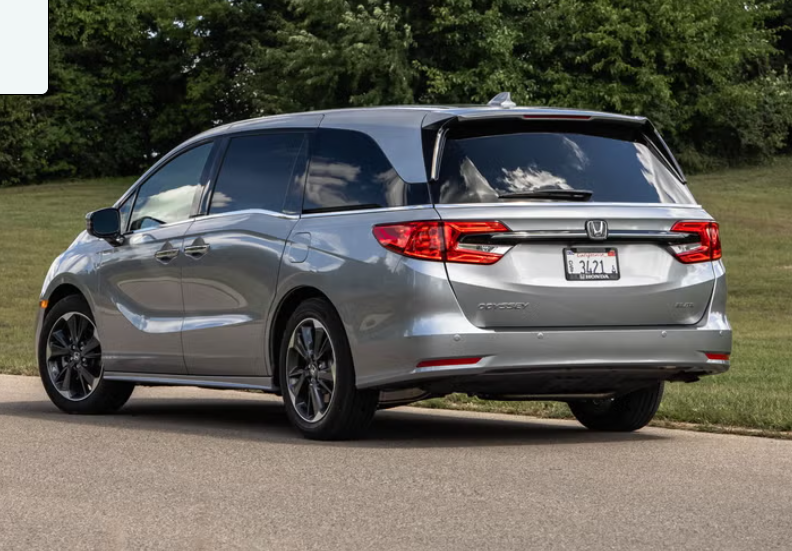
Honda Odyssey
Honda Insight
Honda HR-V
Honda CR-V
Honda Fit
Honda Civic
Honda Accord
The affected vehicles include some of Honda’s best-selling models including compacts, family SUVs and pickups. Due to the recall covering multiple model years, owners should check before assuming that their vehicle is not affected.
Understanding the Airbag Sensor Problem
Occupant detection systems in modern cars are complex systems that enable the vehicle to decide how a deployment of an airbag should behave once a collision is detected.
These systems utilize sensors in the front passenger seat to estimate the weight and dimensions of who or what is in that space.
That information helps the vehicle make critical safety decisions. For example, the technology can detect a child or infant in a rear-facing car seat is sitting in the passenger seat and disable airbag deployment to reduce risk of injury. In contrast, if an adult occupant is seated the air bags are deployed as normal in a pretty severe accident.
On affected Honda and Acura vehicles, the issue stems from within a printed circuit board that’s part of the seat weight sensor. A capacitor on the circuit board might break under certain conditions leading to a potential internal short.
A damaged sensor can send incorrect occupant information to the safety system of the vehicle. This means that airbags could deploy when they should be off, so in cases involving children or smaller passengers.
How the Defect Developed
The problem stems from a manufacturing change to the printed circuit board within the weight sensor assembly, according to data submitted to regulators.
The cause was eventually identified as an alternative base material that was used during production, according to Honda. The reworked material met initial specifications; but permitted a greater build up of stress and strain through the life of the printed circuit board structure.That additional stress made it more likely for the capacitor to crack. If the protective layer is broken and moisture gets in, an internal electrical short circuit can occur.
While the defect may not exhibit any immediately noticeable symptoms sees drivers find themselves potentially being unable to accurately detect if a passenger is in one of the front seats, possibly compromising the safety device during an impact.
Why Airbag Accuracy Matters
New airbags are one of the most critical safety technologies when it comes to protecting occupants in a crash and saving lives. However, airbags needs to be deployed at the right time when they are actually needed.
An occupant classification system that works correctly is essential for the airbag to be activated depending on who is sitting in the seat. False positives can have drastic consequences, such as when the system assumes an occupant is safe.
Airbags are specifically dangerous for small car occupants, such as children or infants who are placed in a rear-facing child seat and by smaller adults who may end up being injured if airbag deployment fires when it shouldn’t do. Front airbags deploy at very high speed within milliseconds of impact, so precise occupant detection is essential.
This is to ensure that erroneous sensor performance isn’t able to interfere with the process, and Honda’s recall is aimed at eliminating that possibility.
Expansion of an Earlier Recall
One of the most interesting parts of this announcement is that it creates an expansion to a recall issued earlier, instead of a new found defect.
Honda had previously alerted a population of affected vehicles via a recall action that began in 2024. But a later probe discovered the original scope of recall did not include every car fitted with the potentially faulty part. At the time, NHTSA documents cited three main reasons for the expansion.
- Incorrect Production End-Date Calculation
One of the suppliers credited with manufacturing the faulty parts miscalculated when production would end for sensor components that had to be replaced. Initially, some cars were not included as the sensors in them may potentially have been faulty due to this error.
- Inaccurate Vehicle Correlation Data
Honda eventually found that some of the data used to correlate faulty parts with individual vehicles was incorrect. Consequently, some vehicles that deserved a recall were not recalled.
- Insufficient Verification Procedures
The investigation also found weaknesses in the confirmation process to determine which vehicles had the defective parts. Incident review & validation identified a broader, higher-risk population than orig.Honda’s findings led the company to expand the recall much further to ensure all vehicles possibly affected receive corrective action.
Have There Been Annual Injuries Reported.
Documents that were publicly available at the time of the recall announcement mostly talked about a potential safety hazard but indicated not many people have been injured or died because of the defect.
Usually, though usually before the really big numbers start showing up, and especially if an investigation points to a component failure that might threaten occupant safety.
In this situation, Honda’s recall expansion shows a preventive approach to take measures before it results in more dangerous consequences.However, car consumers need to heed the recall and get repairs as soon as they are notified.
Honda’s Solution
To fix the problem, Honda dealers will replace the front passenger seat weight sensor with an updated part that uses a different circuit board base material than the alternative material involved in the defect.This included a replacement component to address the crack risk identified during that investigation, and return the occupant detection system to correct operation.Most importantly, however, all repairs pertaining to the recall will be carried out free of charge to vehicle owners.Like most safety recalls, Honda will pay for parts and labor to repair the vehicles.
When Will Owners Be Notified?
Honda will notify owners of affected vehicles by mail beginning July 6. Owners will be given directions on how to make an appointment with a certified Honda or Acura dealer.
The letters will describe the defect, identify the safety hazards, and tell owners how they can have it fixed for free.Due to the high quantity of cars affected, repair appointments may be staggered over many months while dealers work through customer demand and spare part availability.
Brocade Shit: How Can Owners Verify Their Vehicle
Honda and Acura owners of the specific vehicles affected by the recent recall will not have to wait for a notification letter to find out if their cars are included.Owners can use the NHTSA recall database or Honda’s recall lookup system to check their Vehicle Identification Number (VIN).There is also a recall campaign specific to each automobile with only the VIN needing to be entered in order to fast track whether or not it is indeed included within that recall.
This step can help owners better plan for repairs before a serious accident and ensure that their car’s safety systems are operating the way they ought to work.
Reminder of the Sense of Importance in Recall Compliance
Vehicle recalls are a key component of automotive safety, allowing manufacturers to fix defects which potentially only become apparent some time after vehicles are available on the road.Many recalls relate to less serious defects, but those related to airbags or systems that protect passengers in the event of a crash should be resolved without delay.
Honda’s most recent recall is a reminder that even the newest car safety features are only as strong as their weakest link. An electronic flaw within a seat sensor may not seem like such a big deal — but it can have grave repercussions if the defect involves a system created to shield occupants in hazardous situations.
The simplest answer for owners of 2023 Honda and Acura vehicles affected by the recall is to check if their vehicle is one of them, take it into a dealership as soon as possible for the free repair, and make sure the occupant detection system works properly. Taking care of the matter sooner than later is important so that airbag systems deliver moderns safety standards.